Intelligent Ecosystems: Farm Management Software and AI for Regenerative Networks
From Data Silos to Connected Systems
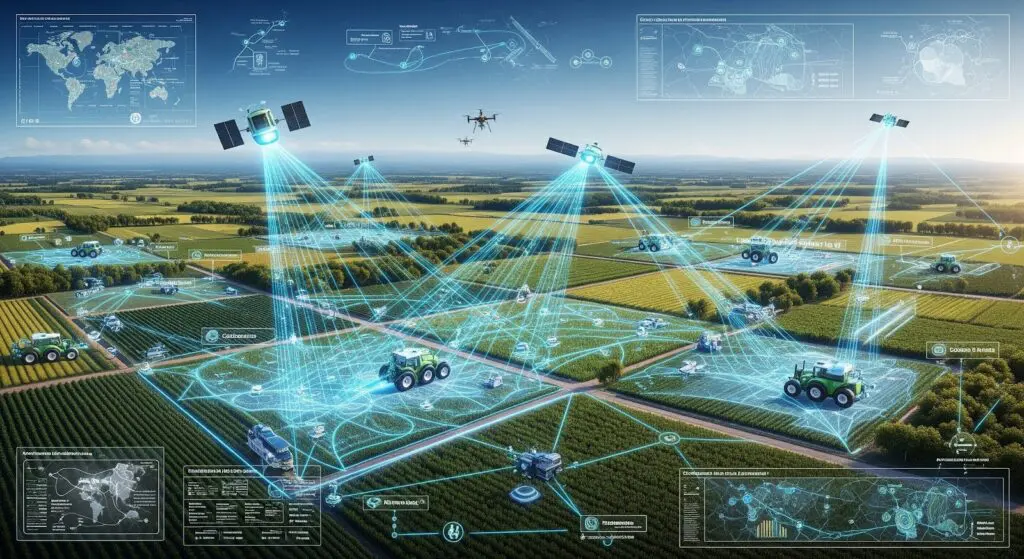
Traditional farm records are scattered across notebooks and spreadsheets, preventing holistic insights. Modern farm management software integrates IoT sensors, drones, weather data and financial records into a unified platform. The global FMS market’s rapid growth—projected to more than double between 2024 and 2030—reflects a shift toward connected systems that process vast datasets and deliver predictive analytics. Integrated FMS solutions cover crop planning, field monitoring, livestock management and supply‑chain optimization. As remote sensing tools detect water stress and map soil properties, AI models forecast yields, identify disease risk and recommend interventions at the level of individual plants.
AI‑Driven Ecosystems for Operations and Customer Success
AI enables farmers, advisors and dealers to collaborate across the ecosystem. At John Deere, machine‑learning sprayers identify and spray only weeds, reducing chemical use by up to 70 % while traveling at 12‑15 mph across three football fields per minute. AI is also transforming customer success: subscription‑based equipment models use real‑time telematics to deliver personalized support at a 1,000:1 ratio. AI assistants answer natural‑language questions, guide setup, flag when equipment isn’t used optimally and generate end‑of‑season ROI reports. In farm‑management platforms like AgriCompanion, AI automates work order creation, monitors task completion, and predicts resource needs. These capabilities free up human advisors to focus on strategic, relationship‑building work. For vendors, offering AI‑powered ecosystems drives recurring revenue, enables proactive support and ensures that operations teams can forecast demand and allocate resources efficiently.
Building Regenerative Networks
True regenerative agriculture goes beyond individual farms. Cloud‑based FMS allows growers, agronomists, processors and marketers to share data and align on sustainability goals. AI tools track soil‑health metrics, water usage and carbon sequestration, enabling farmers to participate in climate‑smart markets. End‑to‑end traceability platforms integrate with FMS and CRM systems, offering transparent supply chains and strengthening trust. Vendors who build open, interoperable platforms can foster data commons where researchers, cooperatives and financial institutions collaborate on regenerative outcomes. This systems‑level approach transforms sellers from software providers into orchestrators of resilient food networks. As the pace of AI development accelerates, staying ahead means weaving intelligence into every stage—from agronomy to logistics to customer relationships.