Prioritizing Nourishment Over Margins
In a global food system increasingly shaped by efficiency and scale, ethical concerns often take a back seat to quarterly profits. Yet, the most sustainable food systems are those that prioritize people and planet alongside productivity. Ethical AI presents a pathway toward this balance—if developed with care and accountability.
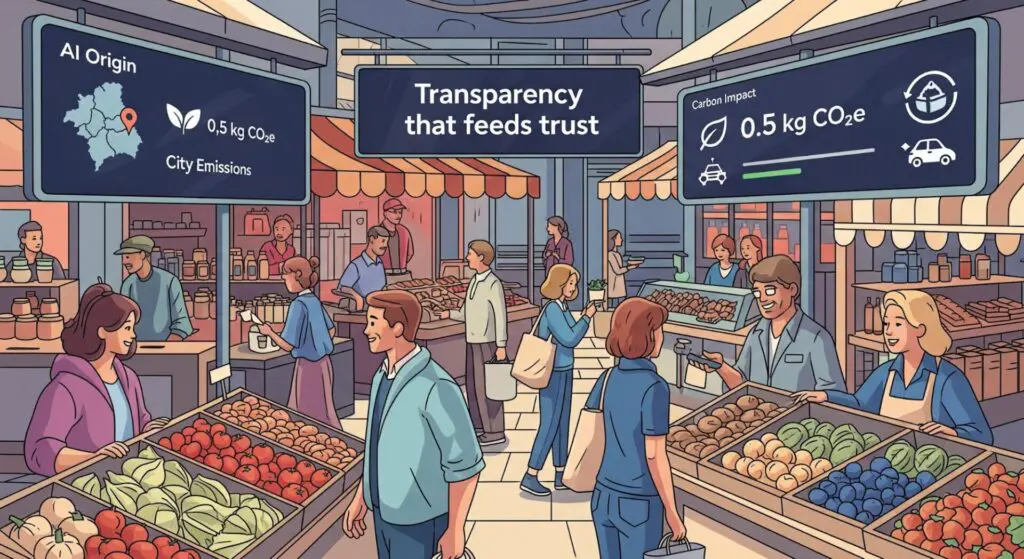
Across the food chain, AI can be used to distribute resources more equitably, reduce ecological impact, and increase food access in underserved areas. But it must be designed to serve the many, not the few. This means grounding AI systems in food justice values: transparency, inclusion, and community oversight.
Human Values, Tech Integrity
Ethical AI in food systems could mean routing surplus produce to local pantries using demand algorithms, or reducing bias in crop insurance decisions. It means evaluating AI not just for performance, but for its societal impacts—whose interests it serves, whose voices it includes, and whose lands it affects.
When AI is guided by care, it enhances dignity rather than diminishing it. And in the face of rising food insecurity and ecological stress, there’s no room for neutrality. We need tools that nourish the whole.