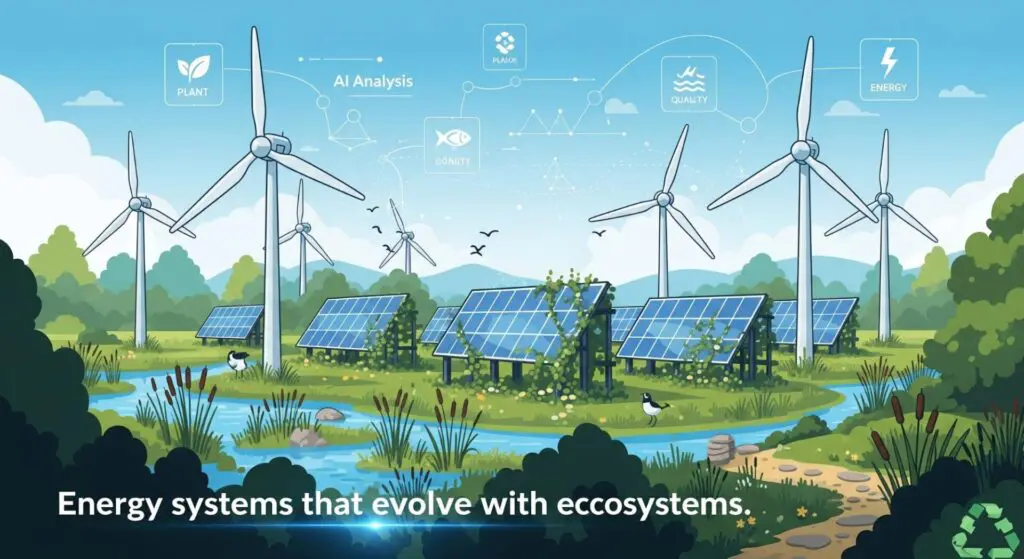
Energy as a Living System
The dominant energy paradigm has long prioritized extraction, centralization, and control. While it has powered remarkable progress, it has also contributed to ecological imbalance, social inequity, and systemic brittleness. The shift toward renewable energy is a crucial step forward, yet it remains incomplete without a deeper reimagining of how we relate to energy itself.
In regenerative systems thinking, energy is not just a commodity—it’s a living flow, embedded in relationships, communities, and ecosystems. To steward such systems requires not just smarter infrastructure, but wiser intelligence. This is where AI can evolve from optimization tool to catalytic partner.
Co-Creating with Complexity
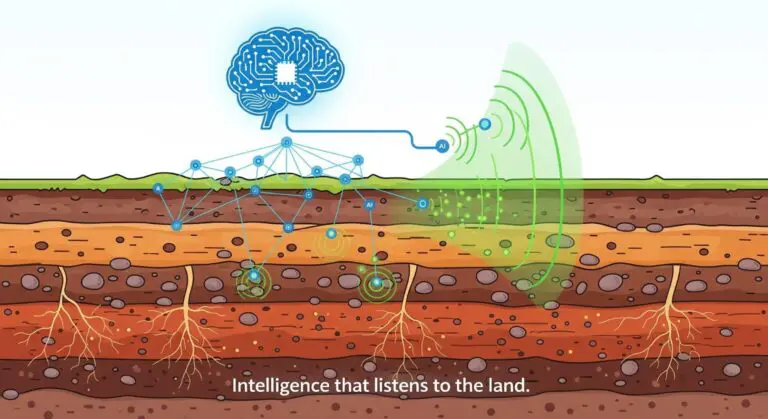
Modern power systems are increasingly complex, decentralized, and dynamic. AI enables us to make sense of this complexity not by simplifying it, but by working with it. Through pattern recognition, adaptive learning, and contextual feedback loops, AI can support systems that regenerate themselves over time—responding to ecological rhythms rather than rigid forecasts.
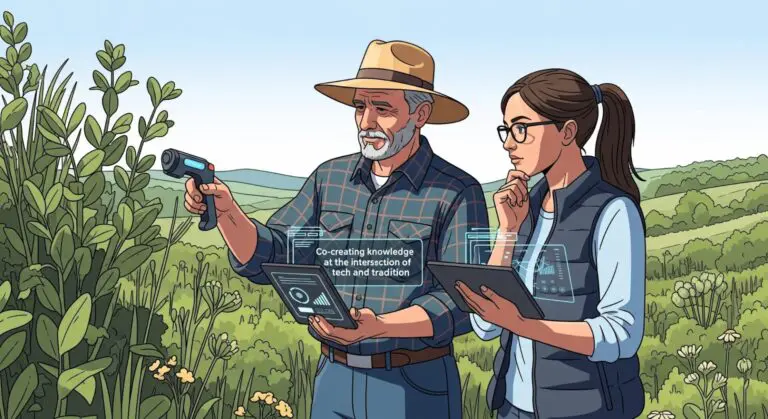
Imagine grid systems that evolve with seasonal cycles, microgrids that learn from indigenous land practices, or power-sharing models that adapt in real-time to community needs. These are not fantasies; they are already beginning to emerge where AI is guided by living systems logic.
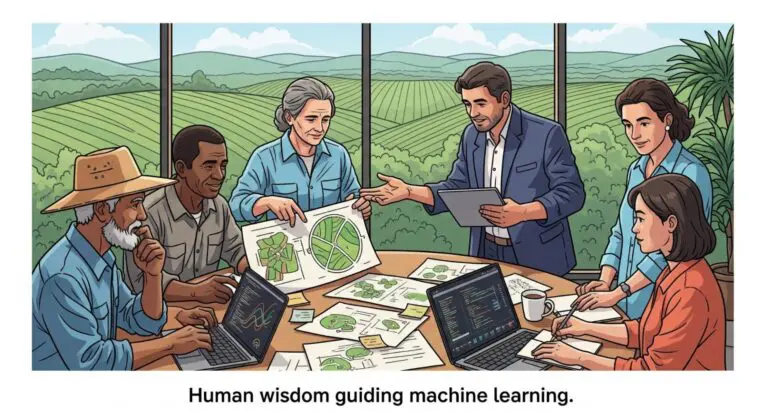
By reframing energy as something to co-steward rather than control, and by designing AI to support emergence rather than command, we unlock a more resilient, reciprocal energy future. One that evolves not just technologically, but consciously.