Cultivating Sustainability and Community with Smart Farm Management
Healthy Soil, Clean Water and Traceable Food
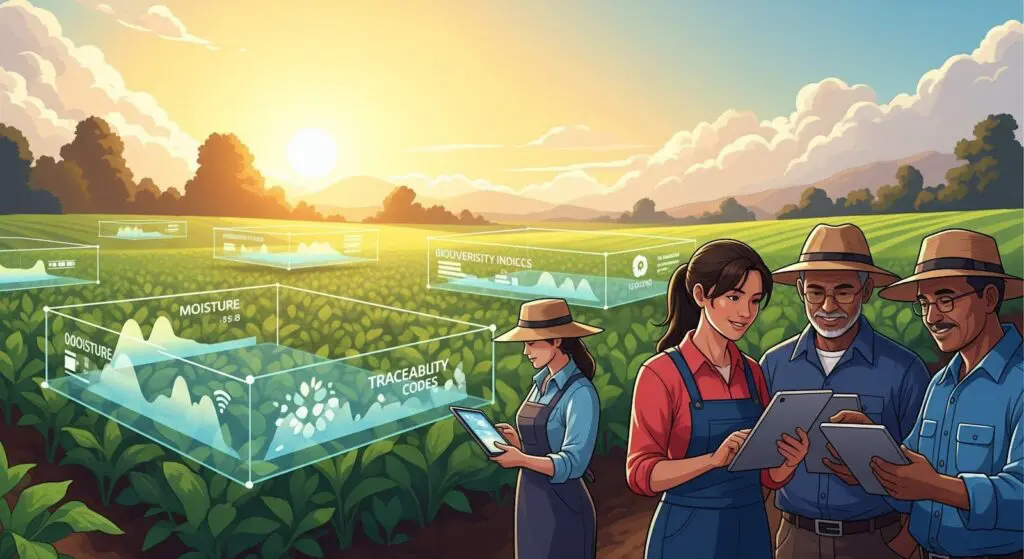
Sustainable farming starts with understanding the land. Farm management software harnesses data from soil sensors, weather stations and drones to monitor plant health, pest risk and nutrient levels. Site‑specific recommendations reduce chemical use and water consumption, while variable‑rate fertilization helps farmers apply inputs efficiently, saving money and protecting ecosystems. FMS platforms compile records for traceability and compliance, enabling quick reporting for organic certifications and QR codes that give consumers transparency from seed to shelf. They also track carbon footprints and soil‑health metrics, supporting regenerative agriculture practices.
Empowering Farmers and Cooperatives with AI
Technology is most powerful when it empowers people. AI‑driven assistants like AgriCompanion offer natural‑language support 24/7, providing real‑time agronomic advice and predictive resource recommendations. They can analyze field conditions and suggest water or fertilizer adjustments. For cooperatives and watershed groups, cloud‑based FMS tools allow shared dashboards where members coordinate irrigation schedules, track input use and co‑manage resources. AI‑enabled CRMs capture customer preferences, purchase history and even personal details, allowing advisors to send individualized messages, celebrate milestones and strengthen community ties. Vendors who integrate AI into their software can offer training and support modules that use natural language processing to educate new users and ensure equitable access.
Stewardship as a Service
Sellers of farm management software can position themselves as partners in stewardship. By highlighting how AI reduces waste, conserves water and improves biodiversity, marketing teams can appeal to eco‑conscious growers and consumers. Operations leaders can use predictive models to anticipate service needs, ensuring sensors and software run smoothly. Customer success teams can produce impact reports showing chemical savings, soil health improvements and carbon sequestration, turning satisfied customers into advocates. With AI‑driven tools, every interaction—from planting decisions to post‑harvest reporting—becomes an opportunity to nurture land, community and business.