We’re living in an era of unprecedented technological advancement. AI is no longer futuristic—it’s embedded in hiring tools, customer service platforms, health systems, and daily business operations. These tools can streamline operations and create new opportunities for connection, insight, and creativity in the workplace.
Without intentional design, AI can reinforce bias, erode trust, and exclude the very people it aims to serve. From opaque decision-making systems to algorithms that amplify inequality, we’ve seen the real-world consequences of prioritizing efficiency over equity. Many teams rush to deploy AI without engaging diverse users or considering long-term impacts.
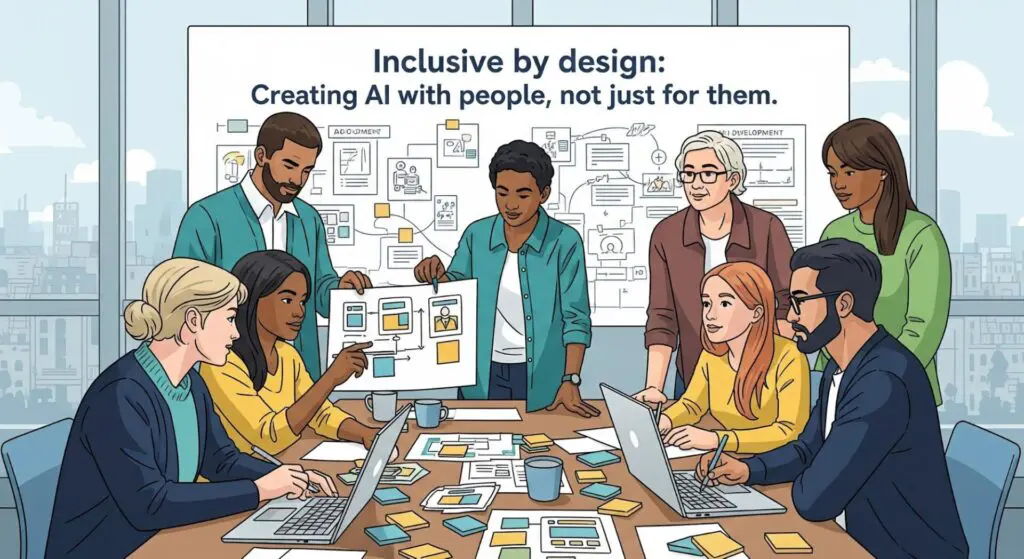
Business leaders must shift from “AI that works” to “AI that works for people.” This means designing systems that are transparent, accountable, and built with diverse stakeholder input from the beginning. Human-centered design practices—like co-creation, empathy mapping, and inclusive testing—ensure that AI respects context and cultural nuance. Real-world examples include inclusive hiring algorithms that account for systemic bias, or customer service bots designed to detect and respond empathetically to user frustration.
When businesses center ethics alongside innovation, they don’t just avoid reputational risk—they build trust, loyalty, and long-term value. Because in the next economy, companies that put people first will lead.