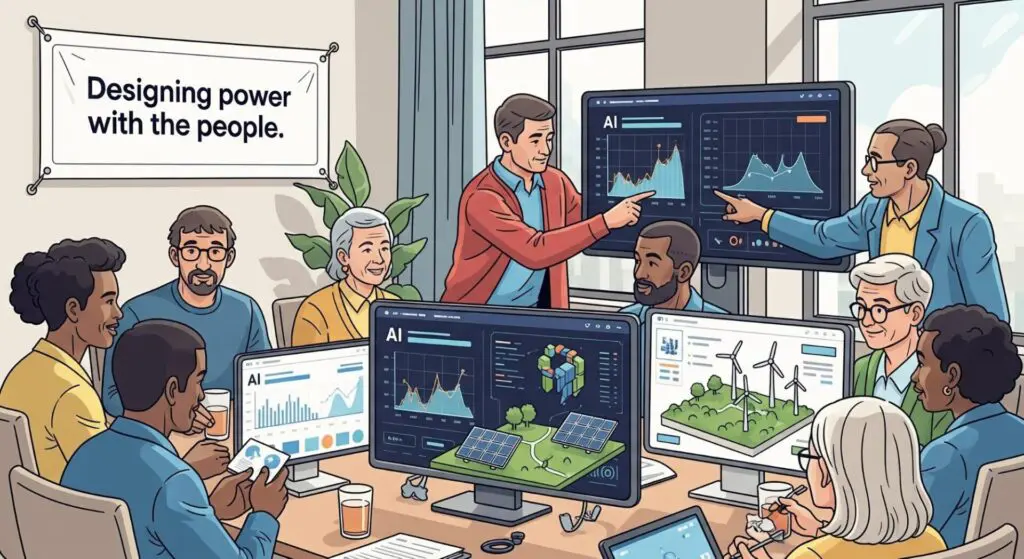
Access to clean, reliable energy is a fundamental enabler of modern life. As nations transition toward renewables, there is growing recognition that this transition must be just. Communities long burdened by pollution and neglect now have the chance to be part of the clean energy future. Advances in AI offer powerful tools for improving grid access and driving smarter, more inclusive energy solutions.
Technology alone can’t guarantee equity. Without community engagement, AI-driven systems risk reinforcing the very disparities they seek to solve. Predictive models can overlook marginalized neighborhoods if they’re trained on biased or incomplete data. Deployment decisions made without local input often fail to reflect real needs. Energy innovation that ignores social context is innovation that leaves people behind.
To make clean power equitable, we must embed justice into the design and deployment of energy AI. This means co-developing tools with frontline communities, using localized data, and ensuring transparency in how decisions are made. From AI-driven microgrids tailored to community resilience needs, to analytics platforms that prioritize underserved areas for infrastructure investment, real progress happens when tech and trust go hand in hand.
Energy justice isn’t just a moral imperative—it’s a smarter way to build systems that last. By making people central to the process, we ensure AI becomes a bridge to clean power, not a barrier.