A System That Feeds Life
Regenerative food systems do more than sustain—they restore. Rooted in interdependence and resilience, these systems are designed to nourish ecosystems, people, and local economies alike. As AI moves into agriculture and food production, there is an opportunity to reframe its role: not as a controller, but as a collaborator in a living, evolving system.
AI becomes most powerful in this context not by dictating outputs, but by amplifying the intelligence of the whole system. It supports biodiversity, adapts to feedback, and aligns with the natural cycles of soil, water, and seasons.
Tools That Grow with the Ecosystem
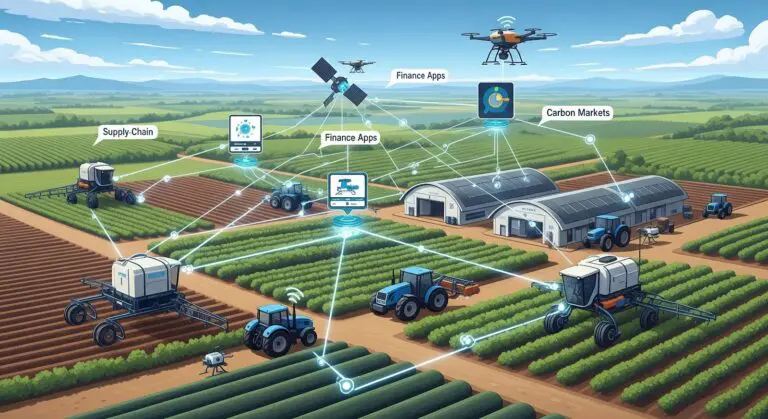
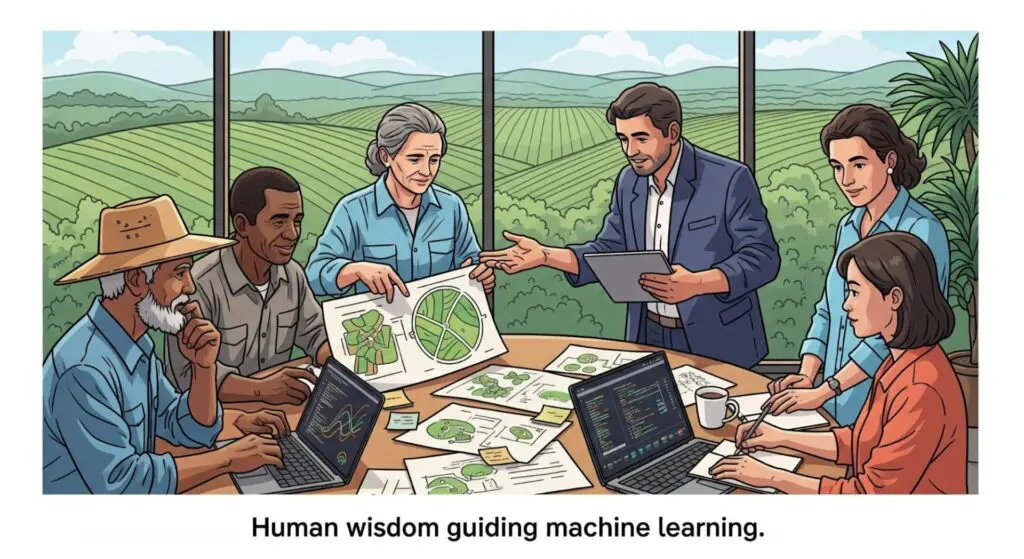
Imagine agri-tech that evolves with its environment: AI systems learning from nutrient cycles, pollinator activity, and microbial dynamics. These platforms do not impose a singular model but adapt in real-time, co-designing with farmers and the land. The result is not just increased yield, but increased vitality.
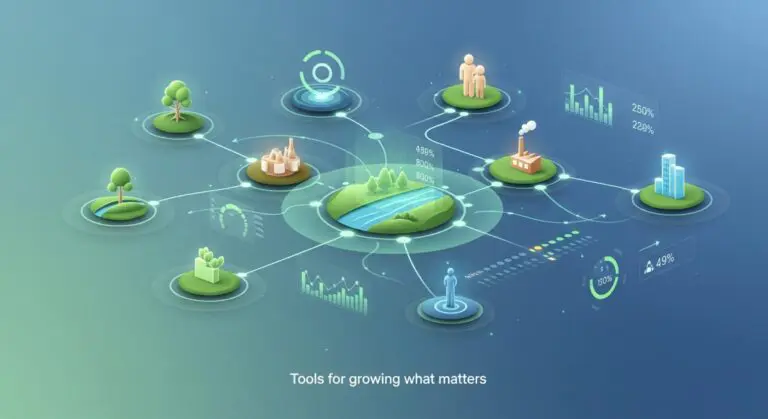
Living food systems enhanced by AI can track ecological health as a core metric, not a side concern. They facilitate dynamic feedback loops where human, environmental, and technological elements inform each other in service of regeneration. This is food production as a living relationship.