Farms as Intelligent Ecosystems: Robots, AI, and Regenerative Networks
Autonomy as a System
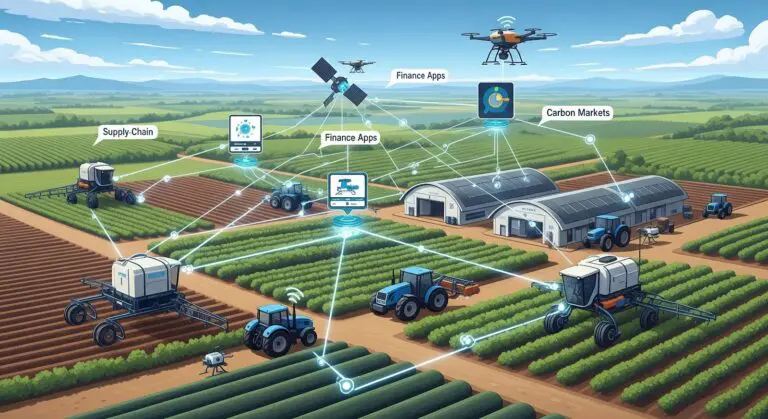
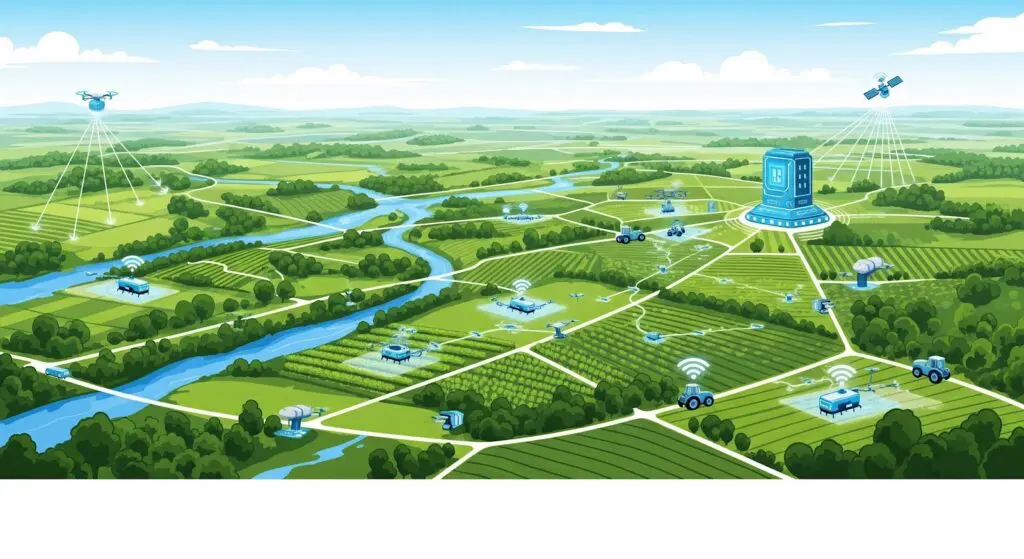
Autonomous farming isn’t a collection of gadgets; it’s a network. Laser weeders, robotic harvesters, drone scouts, and AI‑guided tractors talk to each other and to the cloud. Market analysts expect autonomous equipment sales to jump from $76 billion in 2025 to over $128 billion by 2034, highlighting a massive shift toward mechanized intelligence. Robots can reduce weed‑control costs by 80% and eliminate up to 200 000 weeds per hour, while AI‑enabled precision sprayers cut herbicide use by nearly 60% and improve yields. As sensors measure soil moisture, nutrient levels, and plant stress, AI orchestrates irrigation, fertilization, and harvesting across fields, preventing over‑application and minimizing erosion.
AI and Sensor Data for Proactive Management
When vast streams of sensor data feed AI models, farms become predictive ecosystems. Agricultural retailers are leveraging AI to automate report generation, develop variable‑rate seed and fertility prescriptions, and simplify HR, accounting, and inventory workflows. Tools like Stenon’s FarmLab turn real‑time soil measurements into precise nutrient recommendations; one Brazilian farm used this approach to cut nitrogen fertilizer by 15 % yet increase yields by 10 %, adding nearly $10 000 per hectare. AI also enhances customer interactions: voice‑enabled apps record agronomist notes on the go and automatically update CRM records. For sales teams, AI‑powered dashboards highlight upsell opportunities based on soil data and equipment usage, while agent‑based optimization platforms like SWARM deliver 7‑to‑10× ROI by optimizing inventory and supply‑chain decisions.
Ecosystem Platforms and Sales Excellence
The future belongs to vendors who see farming as a living network. By offering open platforms that integrate robotics, AI, IoT sensors, and traceability, sellers of ag and ranch sensors can help customers move beyond one‑off products to ecosystems. AI‑driven apps keep advisors in constant communication with growers and provide “sense‑and‑respond” alerts when pests or diseases strike. Customer success managers can access aggregated performance metrics to schedule maintenance and introduce new products at just the right moment. Operations leaders can use predictive demand analytics to forecast sensor stock and coordinate with supply partners. Marketing can craft narratives around regenerative agriculture and climate‑resilient food systems, turning data into stories that resonate with consumers and policymakers. When autonomy, data, and AI converge, farms become intelligent ecosystems that produce more while healing the land—and sellers become partners in that regenerative journey.